North Carolina Insurance Claims — Frequently Asked Questions
Answers to the most common questions North Carolina homeowners and business owners ask about hurricane damage, insurance claims, and public adjusters. Need help now? Call Marc Lancaric 24/7 at 910-236-6655 for a free claims consultation.
What is a public adjuster and what do they do?+
A public adjuster is a licensed insurance professional who works exclusively for you — the policyholder — not the insurance company. When your North Carolina home or business suffers hurricane, flood, wind, or other property damage, your insurer sends their own adjuster whose job is to protect the company's bottom line.
A public adjuster levels the playing field. They document every aspect of your loss, review your policy for all available coverage, prepare a detailed claim on your behalf, and negotiate with your insurer to ensure you receive the maximum settlement you are entitled to.
How is a public adjuster different from an insurance company adjuster?+
The key difference is who they represent. An insurance company adjuster is paid by and works for the insurer. A public adjuster works solely for you, paid a percentage of your final settlement — meaning they are financially motivated to maximize your recovery.
North Carolina has experienced catastrophic hurricane seasons in recent years. After major storms, insurers process thousands of claims simultaneously, often resulting in rushed, incomplete assessments. Global Patriot Adjusters ensures your specific loss receives the thorough review it deserves.
Is it worth hiring a public adjuster in North Carolina?+
For most moderate to large hurricane and storm claims in North Carolina, yes. North Carolina's hurricane exposure spans the full state — from the barrier islands and coastal plain to the mountain regions that experienced catastrophic flooding from Helene in 2024.
An experienced public adjuster knows NC's specific insurance laws, knows how to document both coastal wind damage and inland flooding damage, and knows how to negotiate with carriers handling thousands of concurrent claims. We offer a free consultation with no obligation.
How much does a public adjuster cost in North Carolina?+
Public adjusters work on a contingency fee basis — you pay nothing upfront. The fee is a percentage of the final insurance settlement, so there is no out-of-pocket cost and no fee if there is no recovery.
Because we typically recover significantly more than clients would receive on their own, most North Carolina policyholders come out well ahead even after our fee.
Can I hire a public adjuster after I already filed a claim?+
Yes. You can bring in a public adjuster at any stage — including after the insurance company has made a settlement offer you believe is too low. If your North Carolina claim has been underpaid, denied, or is still open, we can step in and advocate on your behalf.
We can also often help reopen a closed claim if additional damage was discovered or the original settlement was clearly inadequate.
Are public adjusters licensed in North Carolina?+
Yes. Public adjusters in North Carolina must be licensed by the North Carolina Department of Insurance (NCDOI). Always verify that any public adjuster you hire holds a valid NC license before signing any contract.
Global Patriot Adjusters is fully licensed in North Carolina. You can verify any adjuster's license status through the NCDOI.
What types of hurricane damage are most common in North Carolina?+
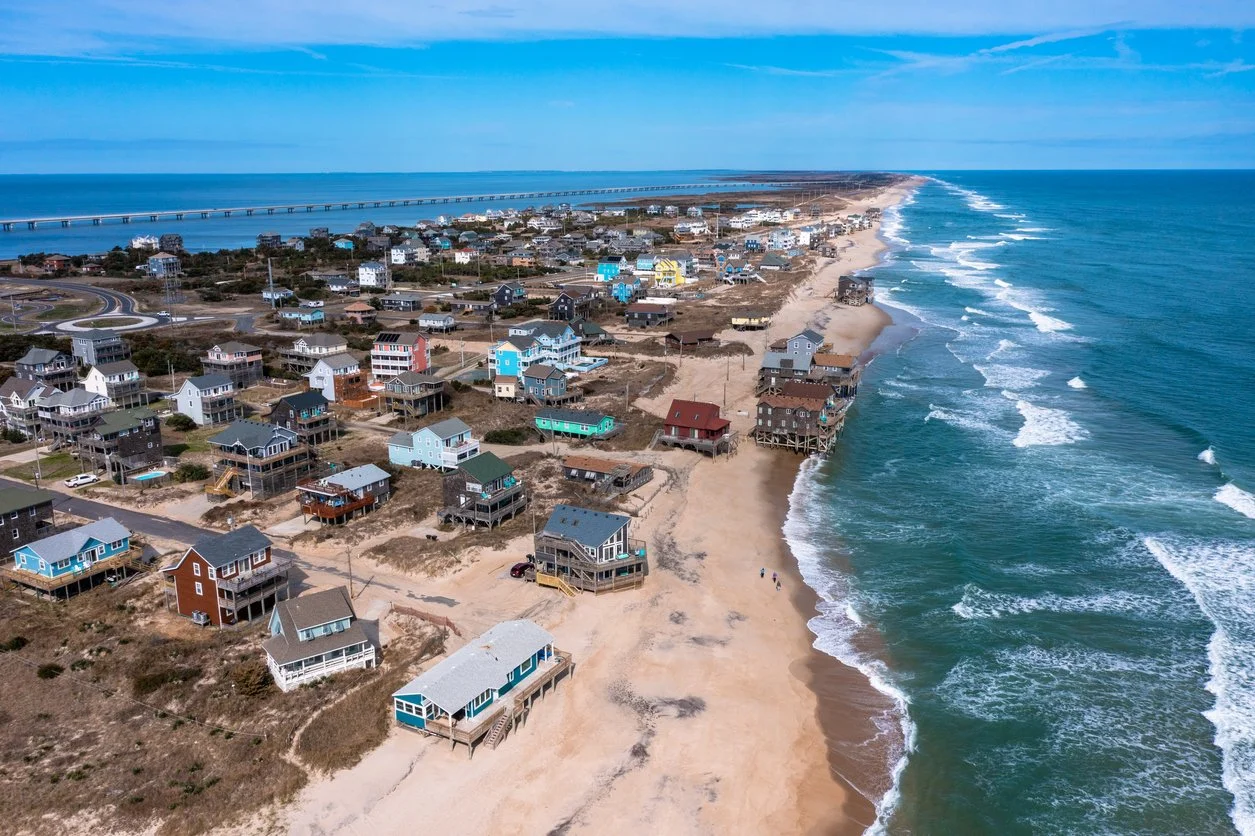
North Carolina's geography creates two distinct hurricane damage scenarios. Along the coast — the Outer Banks, Wilmington, Jacksonville, and the Crystal Coast — the primary damage comes from wind, storm surge, and coastal flooding. Roof damage, structural damage, storm surge flooding, and beach erosion are the most common coastal claims.
In the Piedmont and western mountain regions — as demonstrated catastrophically by Hurricane Helene in 2024 — the primary threat is extreme inland flooding from rainfall that overwhelms rivers, streams, and drainage systems. Asheville and the surrounding mountain communities experienced devastating flood damage that was a covered peril under standard homeowners policies in many cases, though flood from natural external sources requires separate flood insurance.
Does North Carolina homeowners insurance cover hurricane flood damage?+
This is a critical distinction for North Carolina policyholders. Standard homeowners insurance covers wind damage from hurricanes and wind-driven rain entering through a wind-created opening. It generally does not cover flooding from external natural sources — including storm surge along the coast or river flooding inland.
However, when a hurricane's extreme rainfall causes a stream or river to flood a home that has never flooded before — as happened in many western NC communities during Helene — there may be coverage arguments depending on the specific policy language and the cause of the water intrusion. A public adjuster can analyze your specific situation and policy carefully.
What should I do immediately after hurricane damage to my North Carolina home?+
1. Ensure safety first — Do not re-enter until officials confirm it is safe, especially in flood-affected areas. 2. Document before cleanup — Take extensive photos and video of all damage before any removal or temporary repairs. 3. Mitigate further damage — Tarp a damaged roof but keep all receipts. 4. Report your claim promptly. 5. Call a public adjuster first — Before giving a recorded statement or accepting any settlement offer. Early professional involvement consistently produces better outcomes on North Carolina hurricane claims.
What is the statute of limitations on an insurance claim in North Carolina?+
Most North Carolina property insurance policies contain a contractual deadline — typically requiring any legal action against the insurer to be brought within one to three years from the date of loss. Review your specific policy for these deadlines and act promptly.
If you believe your claim has been underpaid or wrongfully denied, contact Global Patriot Adjusters as soon as possible. We always recommend consulting a North Carolina insurance attorney for specific legal advice on your situation.
What if my North Carolina insurance claim was denied?+
A claim denial in North Carolina is not always final. Common grounds for denial include wind vs. water causation disputes, maintenance neglect allegations, and documentation gaps — each of which can often be successfully challenged.
A public adjuster can review your denial, assess whether it was justified under your specific policy language, and help build a documented case to dispute it. File a complaint with the North Carolina Department of Insurance if you believe your insurer is acting improperly. The consultation is free — call us before accepting any denial.
Dealing with a hurricane or storm damage claim in North Carolina?
Call Marc Lancaric and the Global Patriot Adjusters team 24/7 for a free, no-obligation claims consultation.
Call 910-236-6655 NowDoes North Carolina homeowners insurance cover mold after a hurricane?+
Mold coverage in NC homeowners policies is typically limited. Most standard policies cover mold only when it is the direct result of a covered water loss — such as wind-driven rain entering through a wind-damaged opening. Mold from flood water is generally excluded.
Following a hurricane, mold can develop within 24–48 hours, especially in NC's humid summers. It is critical to document mold thoroughly as part of your claim. Our adjusters are experienced at identifying and documenting all mold-related damage to ensure it is included in your settlement.
Can a public adjuster help with a commercial property hurricane claim in NC?+
Absolutely. Commercial hurricane claims in North Carolina are among the most complex insurance claims, involving wind damage, flood losses, business interruption, inventory damage, and multiple coverage layers — particularly for coastal businesses and mountain tourism businesses affected by Helene.
Global Patriot Adjusters has extensive experience with North Carolina commercial property claims. We work to ensure every covered loss — including business income interruption — is fully accounted for in your settlement.
How long does a North Carolina insurance company have to respond to a claim?+
North Carolina insurance regulations require insurers to acknowledge receipt of a claim promptly and begin investigation without delay. Insurers are generally expected to acknowledge a claim within 10 business days and complete their investigation within a reasonable period.
If your North Carolina insurer is being unreasonably slow or unresponsive, a public adjuster can apply appropriate pressure and help you file a complaint with the NC Department of Insurance.
How many major hurricanes have hit North Carolina in the last 10 years, and what kind of damage did they cause?+
North Carolina has experienced devastating hurricane impacts over the past decade — from coastal storm surge to unprecedented inland flooding in the mountains. Here are the most significant storms and the damage they caused:
Hurricane Helene alone caused more damage to North Carolina than all previous hurricanes combined. If your property was damaged in any of these storms — including Helene — Global Patriot Adjusters is available 24/7 to help with your insurance claim.
Why were Hurricane Helene claims in western NC so complicated?+
Hurricane Helene created unprecedented claim complexity in western North Carolina for several reasons. First, the damage was primarily caused by inland flooding rather than wind — and most standard homeowners policies do not cover flood from external natural sources. Many mountain residents had never purchased flood insurance because their communities had never flooded before. Second, the scale of destruction — entire communities cut off for days or weeks — made damage documentation extremely difficult. Third, infrastructure destruction meant adjusters couldn't access properties for extended periods. Fourth, the sheer number of claims overwhelmed insurers simultaneously.
If you suffered Helene damage, it is critical to have a public adjuster review your specific policy carefully. Some interior water damage from rainfall — as opposed to river flooding — may be covered under your homeowners policy. A public adjuster can identify every possible covered claim avenue and ensure your settlement is maximized.
Why do so many North Carolina hurricane claims get underpaid or denied?+
Common reasons North Carolina hurricane claims are underpaid or denied include: wind vs. water causation disputes (especially relevant given NC's frequent inland flooding events); incomplete damage documentation in large-scale disasters where adjusters are overloaded; aggressive depreciation on older coastal housing stock; failure to include code upgrade requirements in repair estimates; exclusion of mold remediation costs; and undervaluation of business interruption losses.
After Helene, a new category of disputes emerged: insurers denying claims on grounds that rainfall-driven flooding is not covered, even when the water entered through wind-created openings or through other mechanisms that may constitute covered losses. A skilled public adjuster with North Carolina experience is essential to navigate these disputes.
Helpful Links for North Carolina Policyholders
The following state and federal resources provide additional information about insurance regulation, consumer rights, and flood coverage in North Carolina.
-
NC GOVNorth Carolina Department of Insurance The official NC state agency regulating insurance companies and adjusters. Verify licenses, file complaints, and access hurricane claim resources and consumer guidance.
-
NC GOVNCDOI — Consumer Services Consumer assistance for NC policyholders including how to file a complaint, understand your policy rights, and get help with hurricane or storm claim disputes.
-
FEMAFEMA — National Flood Insurance Program (NFIP) Essential for NC property owners. Standard homeowners policies do not cover flood damage from storm surge or river flooding. The NFIP provides flood insurance details and claim filing guidance.